
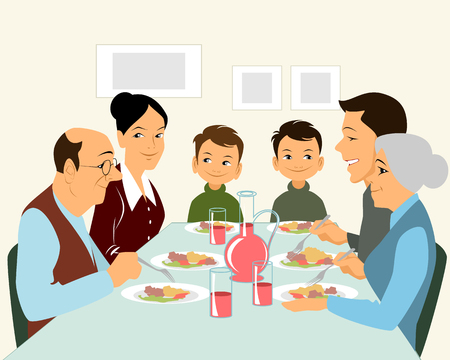
Thanksgiving is a time for coming together, a time for long meals and long in-depth conversations, doesn’t exactly sound ideal for kids though. We at “Let’s Eat” want to help make things easier for your little ones. Luckily we have child behavior specialist Dr. Marcie Beigel (NYC) giving us some tips and tricks to navigate your kids through this holiday.
1) Getting kids to sit at the Thanksgiving dinner table
Don’t make the expectations for this meal so super different from what you normally do…if your child never sits at the dinner table for more than 2 minutes, it is highly unlikely that they will sit at Thanksgiving for longer. That said make a non-traditional plan that will work. Maybe the kiddos eat dinner first and then watch a movie while the adults linger over the meal. Find a plan that will work for you and be realistic with your child’s skills.
Start working on sitting for a meal long before Thanksgiving – might be too late now but you still have time for Christmas and Hanukkah. Small steps each night will lead to a child who can sit for a meal.
If you child does usually sit – get clear on how long he/she usually sits. Then give them breaks during the holiday meal. Send them off to the bathroom after 20 minutes and then to get an extra cup from the kitchen. If you give them reasons to get up and move around periodically, they will be able to sit for longer.
Keep paying attention to your child. It can be tempting to get caught up in adult conversation over the meal – if you don’t stop and give your child attention periodically, you are more likely to get problem behavior that demands your attention.
2) Eating new and different Thanksgiving foods
Thanksgiving might not be the time to get your kids to try new food – while there are lots of opportunities here to do so – it can also lead to challenging behavior that you want to avoid. Maybe for this one night, you let them have a dinner of all mashed potatoes in order to keep everyone happy.
Try new foods when the stakes are much lower and there is not an audience. When you do, phrase it in a positive way, “I have this great new food that I know you will love, you just need to try 2 bites tonight” Rather than, “well, not sure you will like this but you have to eat it.” When faced with that, no one wants to try that food. Start with small amounts – only give them the amount of food you want them to realistically eat. Giving them a giant piece of turkey, when they have never eaten it will only lead to debates. Put a small amount on their plate to start – they can always ask for more if they want it.
If you are looking for the escape of criticism from relatives around food – tell your small one that they need to have the new foods on their plate but don’t need to eat it. Keeps everyone happy. This way you can look like your child eats all sorts of food and is just not that hungry at the Thanksgiving table.
3) Balance family at the holidays
Set up your immediate family strongly when spending time with extended family. Let your kids know when there will be family check in times and when they get individual time with you. Often times kids act out to get you to pay attention to them – holidays enhance this. If you create a plan to give your kids individual time regularly throughout the visiting, you can avoid the problem behavior. Depending on your child the frequency will vary – maybe it is a 5 minute check in every hour or maybe it is a 30 minute parent child walk each morning and afternoon. This has been my biggest support to families over the years – small and simple and super powerful.
Be clear about what works for your family – if there structures or rules that you know are best for your kids, let the rest of your family know upfront what you do and that these rules will be followed. Then be ok sticking with it. If you know your child becomes an ogre if up past her bedtime, then let everyone know that bedtime is non-negotiable. Then at bedtime be clear and action based to make it happen. You might need to stand up to other adults questioning you but you know your child best and do what you know is right.
When others have opinions about how to raise your children – just listen. You can attempt to educate them about what you are doing and why you are doing it, but don’t argue. Know in your heart you know your family best and that this extended family member is just trying to help. Be confident enough in your parenting to smile and nod and thank them for their insights – then do what you know is best. It is hard not to take others words personally but you can do it.
More about the expert:
 Based in NYC, Dr. Marcie Beigel is the founder and director of Behavior + Beyond. She works on behavior and family issues with all children, but her specialty includes those labeled with ADHD, ODD, OCD and Autism. Among her many degrees and certifications she is a Board Certified Behavior Analyst-Doctorate and a Doctorate from Teachers College, Columbia University. Her writing has appeared in NY Parenting, NBC Parenting Toolkit, and numerous blogs. She lives in Brooklyn where she practices yoga and craniosacral therapy in her off time. She also has a new book out called Love Your Classroom Again.